Rubbish Removal & Sustainability
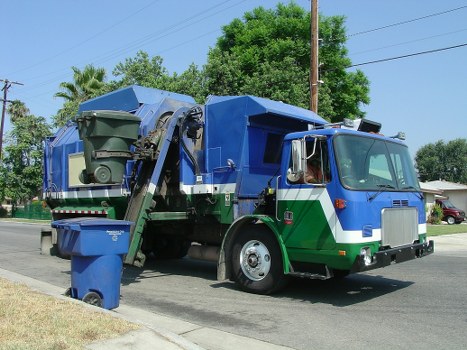 Rubbish Removal is no longer just about clearing space — it is about protecting the environment, conserving materials and reducing carbon emissions across our communities. Our sustainability page explains how our waste removal and recycling efforts align with local borough strategies, our ambitious recycling percentage target, and the practical steps we take every day to ensure responsible disposal. We work with local authorities that encourage residents to separate food, glass, paper and mixed plastics so that collection streams remain clean and recyclable.
Across the area our approach to rubbish removal services complements municipal schemes: where boroughs run kerbside sorting and organics collections we ensure that materials collected by our teams arrive at the correct facilities to be processed. We also support community collection events and collaborate with local transfer stations to maximise diversion from landfill. Separation at source remains a cornerstone of efficient recycling and we build our operations around it.
Our Recycling Percentage Target
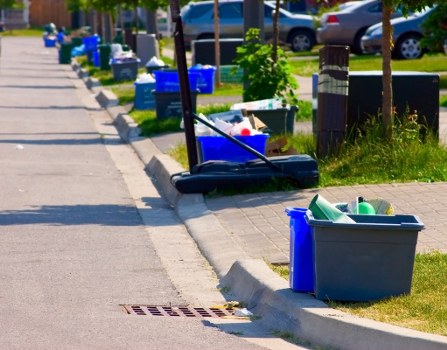
We have set a clear and measurable recycling target: to divert 70% of all collected material from landfill by 2030. This recycling percentage target is ambitious but realistic given current technologies and partnerships. Achieving 70% requires consistent sorting, investment in low-carbon transport, and close coordination with transfer stations and material recovery facilities. Our aim is to increase the rate each year through improved collection practices, educational outreach and stronger links with local processing hubs.
To meet our recycling goals we rely on a network of local transfer stations and material recovery centres. These facilities are the backbone of responsible waste management: they allow us to consolidate loads, ensure correct material streams, and send recyclables to the right processors. We work closely with transfer stations across borough boundaries so that paper, cardboard, metals and plastics are routed efficiently and reused wherever possible. This helps reduce transport mileage and ensures higher-quality recycling outputs.
Partnerships with Charities and Community Groups
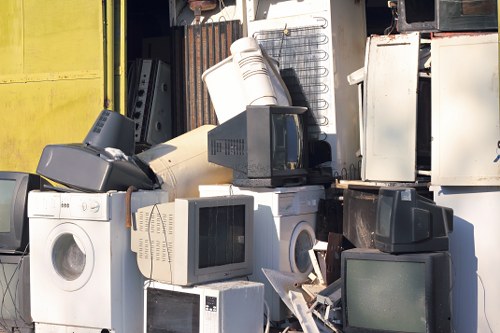
One of the most effective ways we increase reuse and recycle more is through strong partnerships with local charities and social enterprises. We fund and coordinate collections for furniture, clothing and household items so that good-quality goods get a second life. Our charity partners — including furniture re-use organisations and clothes banks — receive sorted items directly from our crews, reducing the need for disposal and supporting vulnerable people in the community. Working together enables both higher reuse rates and social value.
We also maintain relationships with community projects that take in electronics and household items for repair and refurbishment. By prioritising reuse and thoughtful redistribution over disposal, our rubbish clearance and waste management activities create positive outcomes: fewer items become waste, and local people benefit from lower-cost, refurbished goods.
 Low-Carbon Vans and Greener Collections — our fleet upgrade is central to lowering the environmental impact of every rubbish collection. We have introduced hybrid and fully electric vans for inner-borough routes and low-emission vehicles for longer journeys. These low-carbon vans reduce tailpipe emissions and, when paired with route optimisation and consolidated loads, result in significantly lower CO2 per tonne of material moved. Investing in greener vehicles is a practical expression of our sustainability commitment.
Operational changes complement vehicle improvements. Drivers are trained in eco-driving techniques, we use route-planning software to minimise empty miles, and we prioritise local transfer stations to keep journey times short. All these steps combine to make our rubbish clearance operations more energy efficient and contribute to meeting the recycling percentage target established earlier in this policy.
How We Support Local Waste Separation Practices
We respect and reinforce boroughs' approaches to waste separation — from dedicated food waste bins to separate glass and paper streams — and tailor our collections to complement municipal schemes. Our teams provide clear sorting at the point of collection and ensure materials are kept uncontaminated. Clean streams mean higher resale and recycling value, which in turn increases the amount of material that gets reused or remanufactured rather than landfilled.
Key elements of our approach include:
- Collaboration with local authorities and transfer stations to maintain proper material streams.
- Charity partnerships to maximise reuse of furniture, textiles and appliances.
- Deployment of low-carbon vehicles for urban and short-haul routes.
- Ongoing internal targets and performance monitoring to raise recycling rates year on year.
Our sustainability commitments are practical, measurable and community-focused. By combining an ambitious recycling target, strong local partnerships, support for borough separation schemes and investment in low-emission vans, our rubbish removal and waste management services deliver tangible environmental benefits. We continue to review progress, seek improvements and expand alliances that help us divert more materials from landfill while supporting reuse and social value in the areas we serve.